|
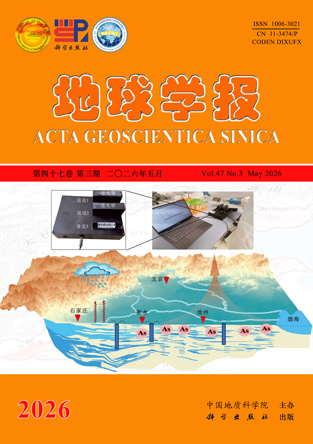
封面故事:华北平原高砷地下水“识别-机制-预警”关键技术示意图。围绕华北平原地下水供水安全保障重大需求, 形成流域尺度地下水砷“识别-机制-预警”全链条解决方案: 优化钼蓝法并研制便携式三通道比色仪, 显著缩短了显色时间(6 min), 实现地下水砷的现场快速检测, 大幅提升野外调查效率; 提出“沉积主控-人类活动胁迫-气候变化驱动”多元控制理论, 量化了区域地下水砷富集的关键驱动因素; 率先构建数值-数据双驱动智能预警模型, 预测精度较传统方法提升20%以上。这项由中国地质科学院水文地质环境地质研究所曹文庚研究员主持的研究成果, 当选中国地质科学院2024年度十大科技进展, 排名第七。详见本期443-453页。(图片提供: 李祥志)
Cover Story:Schematic diagram of the key technologies used to implement the “Identification–Mechanism–Early Warning” method for high-arsenic Groundwater in the North China Plain. Addressing the major demand for safe groundwater supply in the North China Plain, a full-chain solution for arsenic in groundwater at the basin scale has been developed based on the “identi-fication–mechanism–early warning” principle: The molybdenum blue method was optimized and a port-able three-channel colorimeter was developed, which led to significant reduction in the color development time (6 minutes), enabled on-site rapid detection of groundwater arsenic, and greatly improved field sur-vey efficiency. A multi-factor control theory of “sedi-ment dominance, anthropogenic stress, and climate change driving” was proposed to quantify the key drivers of regional groundwater arsenic enrichment. A numerically and data-driven dual-method intelligent early warning model was pioneered, which improved the prediction accuracy by over 20% compared to that of traditional methods. This research achievement, led by Professor Cao Wengeng of the Institute of Hydro-geology and Environmental Geology, Chinese Academy of Geological Sciences (CAGS), ranks the seveth among the “Top Ten Sci-tech Progresses of CAGS in 2024”. For details, see pp. 443-453 of this issue. (Photo by LI Xiangzhi)
|
